Showing posts with label Guest Blogger. Show all posts

Saturday, October 24, 2026

The Three Hangings, Lycoming County.

This week, we feature a guest post by Don Everett Smith Jr., author of The Goffle Road Murders of Passaic County (History Press, 2011).   In a previous post on Murder by Gaslight, “Revisiting the Goffle Road Murders,” Don presented an excerpt from his book. This week’s post, “The Three Hangings, Lycoming County,” examines the 1880 murder of Andrew Miller in Lycoming County, Pennsylvania, and the prosecution of his killers.


The Three Hangings, Lycoming County.

Murder 

Lycoming County, Pennsylvania; 1880 – 1881

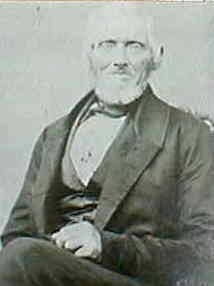
It was near springtime in 1880 when a small Lycoming County town, of Pine Creek, was shocked by the brutal death of a beloved Civil War veteran named Andrew Miller.  According to Feb. 4th, 1881 The Daily Banner, Miller was described as being 58 years old in 1880 and married to a woman 20 years younger named Catherine Rush. They had three girls and he supported them as “a laborer by occupation, working for a livelihood at such work as he could get in a farming community.”  

Miller was described as a “plain unassuming man, poor and industrious.”  He was “faithful and good to his wife’s parents” and a “hard and ready worker, kind and obliging to everybody.” However, on March 19th, 1880, in the early morning, “Andrew Miller had committed suicide by hanging himself” in the barn on his rented homestead. 

His wife was named Catherine, often called Kate. “She was born in Bald Eagle Township, Clinton County, Pa., on the 3rd day of September 1851,” a newspaper writer said.  Academically, she was described as having “only received about one year of schooling her whole life.”  She was called a “poor scholar, barely able to read and write.” She was kept at home “being the youngest child…to aid her mother in the household work.”  

She and her parents moved to Porter Township in 1866, and there met Andrew Miller, who was two decades her senior in 1867.  She was 16 years old, and he was a veteran of the Civil War. “They at once became quite fond of each other and in this intimacy, notwithstanding the great difference in their ages, continued,” the writer said.  

Eventually the two of them married in 1868. However, there was a rumor “that her father compelled her to marry Andrew Miller.” Yet, another family member of Mrs. Miller said that was not the case. When Miller had proposed to Catherine Rush, she “very readily accepted.”   

To take things further, Andrew Miller said to Mr. and Mrs. Rush, Catherine’s parents, “that they would have a home with him and his intended wife as they (the old folks) lived,” the writer said. He explained that all four of them “lived peacable…together.”  

Catherine’s mother died after moving in, and Catherine’s father lived with them until he passed away in 1878.   

The Millers had three daughters, and at the time of their deaths, Mary was 12 years old, Jennie was nine, and Eliza was six. 

Andrew seemed to have everything to live for, but like many stories of suicide, it can come when least expected.  “Many of those [residents of the area] who assembled to look upon the supposed suicide were convinced that Andrew Miller had not taken his own life,” the newspaper writer said, “But that he [Andrew Miller] had been foully murdered and hung up to a beam in the barn.”  

The next question was obvious, if he did not commit suicide, who killed Andrew Miller? 

“Certain suspicious conduct on the part of one George Smith and Mrs. Miller led to their arrest,” reported the newspaper writer.  

A Coroner’s Inquest was empaneled with several local officials along with Catherine Miller and their oldest daughter.  

The inquest found:

● “Four wounds…on the back of the head…made with some blunt instrument.”

● “The jaw was fractured.” 

● “A hole cut in the chin.”

● “The body was bruised at the lower right ribs.” 

● Wounds to the stomach and liver 

● Abrasions of the shoulder, face and right arm pit. 

● The brain was covered in blood 

● Liver was lacerated 

● A great deal of blood in the abdominal cavity.  


The coroner said, “...the deceased came to his death by violence.” It was added that, “We believe from the evidence that…Andrew Miller came to his death at the hands of George Smith, and that Catherine C. Miller…was accessory before and after the fact.” 

On March 20th, Constable Joseph Stevenson and Deputy Daniel Strayer took both of them via train from Jersey Shore to Williamsport, where they were “confined in the county jail.”  

“Both the prisoners vehemently protested their innocence of the murder,” the writer said.  

Based on the confession of George Smith, this is essentially what happened.   On the night the deed was to be committed, Mrs. Miller put a light to the window as a signal the two were going to go to bed.  At which time, Smith began to make all kinds of noises near the barn. Mrs. Miller told Andrew, “There is a noise at the barn; get up and go down and see what it is.”   And being the good husband he was, he went down and checked it out.  

With a “three foot long, [club of] hard wood” that had been leaning up against the barn, Smith struck Andrew Miller from behind. “Once in the head, once in the face and once in the stomach,” Smith said when asked about the beating. Smith dragged the body to the barn. He described Miller’s condition as he had “life enough to stiffen himself up a little.”   

He then procured a rope from Mrs. Miller.  

“She then proposed throwing him down a well before I hung him up,” Smith said.  

When asked about it, Jersey Shore newspaper reporter Seely asked Smith about the “why” of it all.  

“Did you and Miller have any difficulty?” 

“No, sir,” Smith said. “We always spoke when we met.”  

“Did you intend to marry Mrs. Miller after having committed the crime?” was asked.  

“No, sir,” Smith answered.  

Finally, Seely asked the following.  

“Did you realize what would come of you when you contemplated the crime?”

“I did,” Smith said. “I knew just what would become of me; I told her so; [and] she said there would be nothing of it; It would never be found out.”  


The Trial

It was a Wednesday in early May of 1880 when Mrs. Miller and George Smith appeared before Judge Cummin pleading “Not Guilty”.  

A little history of Judge Hugh Cummin, which comes from the Lycoming Law website:  

When Judge Cummin was elected to the bench [in 1878], the civil business of the court was about two years behind schedule. But within two years the business of the court was brought up to date, and ever after during his administration, when the trial list was made up, everything was put down that was ready for trial. 

In criminal court likewise, two years of his austere and prompt administration of justice had produced most efficacious results. The third year there were 100 less cases than the year before. At the next May term of court, no one was sent to the penitentiary, and none even to jail. Judge Cummin kept an accurate record of all trials and the expense of the trials, and was thus enabled to know where the public money was wasted and how to introduce reforms. For the year 1881, the expenses were reduced over the previous year by $8,000 and for 1880 the reduction was more than $7,000 over the year 1879.

Of over 2,000 cases tried before him in a period of three years, about fifty were appealed, of which but a small number were modified or reversed. Notwithstanding the fact that he was then one of the youngest judges in the state, he was held in high esteem by nearly all the other President Judges.

The Banner’s Feb. 4th, 1881 article explained that it was on Thursday, May 6th at 9 AM that the trial began (a jury had been selected the day before).  What was presented by the D.A. made for a “a strong circumstantial case” and the State rested on May 7th.  The Defense responded by not calling any witnesses. The defense rested, and the case was sent to the jury.  

“It is your duty…to give the defendants…the benefit of every reasonable doubt,’ Judge Cummin told the jury. “You are to find the facts, and you are to apply the law as we have given it to you. Carefully weigh all the evidence in the case. You must see to it that no guilty person escapes, as well as no innocent person shall be convicted.”  

The jury was excused to deliberate, but on May 8th, on Saturday at 3 PM, “the courthouse bell rang to indicate the jury arrived at a verdict.” This drew a large crowd to the court house and once all were assembled inside, a “guilty [verdict] was given by the jury.” 

The judge then gave the following punishment for Mrs. Miller and Mr. Smith.  “George Smith and Catherine Miller…you have been…convicted of the high crime of murder, in the first degree,...Your guilt was fully established by unequivocal evidence…”  

He continued to review the trial, but said, “I will not recall the bloody details of your horrible crime…I cannot think that either of you alone would have killed this poor old man, who neither did harm to either of you. If there is mercy for you in another state of existence, there...can be none here.”  

Cummin concluded for both Catherine Miller and George Smith that both “be taken…to the jail of the county of Lycoming…to the place of execution, within the walls of said jail, and that you be hanged by the neck until you are dead. And may God have mercy on your [souls].”  

Following the trial and sentence pronouncement, the lawyers for the two of them worked and pleaded for a commutation to life in prison. Ultimately, the “Higher Ups” in Harrisburg decided to let the judgement take its course.  


Execution 

Before their execution, The Daily Banner described how Miller and Smith spent their last night in prison. A constable carried two of Mrs. Miller’s daughters to visit her in her cell. 

Rev. Resser, of the St. Paul’s Lutheran Church, had been in the cell with Miller. “He administered the sacrament to [her]...[she] gave every evidence of having made her peace with God,” the writer said.   

As the children entered, she “seized them eagerly and affectionately [embraced] them.”  They stayed with her until 8 p.m. that night. The writer called their parting “very affecting, Mrs. Miller exhibiting the most intense agony and grief of spirit.”  

At 2 AM, local publisher C.B. Seely and minister Rev. Bright visited Smith and administered sacraments. Seely took Smith’s criminal confession and “seemed in very excellent spirits.”   

At 4 AM, Seely and the minister departed.  

With the same images used of George Smith and Catherine Miller,  The Daily Banner on Feb. 4th, 1881 headline said it simply, in large font, “HANGED!” Followed by the graphically titled “Both of the Culprits Necks Broken.”  

It was just 11 AM when Smith and Miller were brought from their cells by law enforcement officials.  

“Several hundred persons had assembled in the jail yard to witness the execution,” the news writer described. The “sad procession” stopped to hear the charges and the sentence read, then it was next to the scaffolding where other members of law enforcement and the Revs. Bright and Reeser. Miller had to be supported while she ascended the steps to the platform followed by Smith.  

“On the scaffold had been placed two chairs, so arranged that when the prisoners stood up they occupied the proper position for the springing of the trap doors,” the unknown journalist described. “In ascending the stairs Mrs. Miller groaned in anguish of spirit, and those who supported her were almost compelled to carry her bodily. Smith also showed great distress of mind, and until the trap was sprung ushering them into eternity they both exhibited much distress, while their bodies shook and trembled like aspen [trees].” 

Bright stepped forward and pulled out a confession that Smith had composed that morning.  

“Friends, I did the deed myself. She laid the plan,” Smith’s confession said. 

He confessed that he killed Andrew Miller, and Mrs. Miller gave him the rope to hang Mr. Miller with it. Catherine then helped clean his clothes with her apron.  

“I want you all to forgive me as I forgive everybody,” he said, “If I had read the Bible as much (as I have) before as I have since I [came] in here, I would not have come here.”  He concluded, “Good bye friends. I am going home.”   

The other reverend, Resser, read Miller’s statement. 

She had left a will that was read. First, she left her remains to her brother Nathan Rush. She requested to be buried by her husband, Andrew Miller [NOTE: The irony is not lost on this chronicler].  She left a silver watch, black coat, and Bible to her daughter Mary.  To her second daughter Jane, she left a “heavy winter dress and a coat” and to her third daughter, Eliza, she left her “two calico dresses.”  

Each of them were left with different families. Mary was left to be cared for by a Mr. Guilden, Jane was left to a Mr. Peter Cable and Eliza was left to “Mr. Aaron Wills, until my pastor…Rev. Mr. Bright can find suitable persons who are willing to receive her and take charge of her.”  

She concluded, “I hope and pray that my daughters will be watched over and cared for, and that they will not go astray as their poor mother did.”  

The Daily Banner writer said, “They are all bright and intelligent looking children, and at present have good homes.”   

Smith also had a will and most of his meager household items were left to other members of his family.  

Smith’s full confession was also read.  The more salient point was that he said he met Mrs. Miller ten years previous but “have only been intimate with her during the past two years.”  He said that she would chase after him wherever he was.  

But she eventually started suggesting ways to murder Andrew Miller. “She either wanted me to take a gun…and shoot him, or take a club and knock him over…” he said.  

She continued to ask Smith to murder Andrew Miller and even suggested poisoning him. This continued for weeks and weeks, she would see Smith and suggest different ways of doing Miller in. 

Smith said that it was on the night of March 18th, 1880 that she finally confronted Smith and said “I want it done this night.”  Mrs. Miller explained the plan and Smith mentioned he was reluctant to do it, but he did it.  He went into detail about how he killed Miller and afterwards, Mrs. Miller said, “You need not run off, for it will never be found out.”  

However, Mrs. Miller would pin the blame on Smith. She said it was he who got poison and she would “take it myself.” 

On the night of the murder, Catherine Miller said that it was Andrew who heard the noise and he was the one who wanted to investigate. She went on to say that Smith had told her children, “He told my children that he had killed their father and strung him up in the barn.” She then said Smith “threatened to whip” the kids if they told anyone.  However, Mary and Jennie Miller said their mother had coerced them in what to say. They told one of the constables what they really did or did not see. 

After that had been completed, “the prisoners were prepared for the execution.” “The hangman’s noose was adjusted about their necks, their hands were tied behind their backs, the black caps were placed over their heads and the prisoners were assisted to stand…” said the reporter.  

Just as Reeser read “some religious exercises”, Sheriff Wilson -  “before anyone was aware of it” - pushed the lever and Smith and Miller “were ushered into eternity.”   

The “workings of the machinery of execution were most perfect throughout,” the writer said and added, “[When] the two prisoners dropped…scarcely a perceptible struggle was noticed in either of them.”  

Miller’s body was surrendered to someone named J.G. Calvert of Jersey Shore. She was supposed to be laid to rest next to her husband.  (Here is a link to her Find-A-Grave entry.)

Smith’s body was released to his brother-in-law, a man named Maggs and was to be buried near the Jersey Shore cemetery. According to Find-A-Grave, he was buried in the Lycoming town of Muncy. 

Conclusion  

The graves of all “three swingers” have been lost to history. In 2026, members of the local branch of the Daughters of the American Revolution made sure to honor Andrew Miller for his service in the American Civil War.   A tombstone was placed in the Pine Creek Cemetery to make sure he was not forgotten. While it is noted his wife and neighbor did not treat him kindly, history has.

Note: Thanks to Tina Cooney, of the Jersey Shore (PA) Historical Society for sharing the story of Andrew Miller.   


Sources:

The Daily Banner “Hanged!” Friday, Feb. 4th, 1881, p. 4.

 Biography of Judge Hugh Cummin. Lycoming Law Org.

“The Miller Tragedy” Jersey Shore (PA) 1881, Valley Girl Views.


Wednesday, July 29, 2026

Guest Post: 'Once a Happy Bride.'

 Howard and Nina Brown are frequent contributors to Murder by Gaslight, on matters pertaining to the 1891 murder of Carrie Brown, viewed by some as the work of London’s Jack the Ripper. The Browns run the website JTRForums.com, discussing all aspects of Jack the Ripper's murders, and CarrieBrown: Murder In The East River Hotel, a discussion site on the Carrie Brown case. They have written three books on Carrie Brown: East Side Story:1891 Murder Case of Carrie Brown, An Illustrated Encyclopedia and A -Z: The1891 Murder Of Carrie Brown In The East River Hotel, and 'Once A Happy Bride' The Tragic Life Of Carrie Brown: From Liverpool To The Lower East Side.

Their latest book, ‘Once a Happy Bride’, available from Amazon, covers aspects of Carrie's life that have been generally glossed over, beginning with her days as a young bride of a successful sea captain, and continuing through her days in New York, when she was never able to shake the ravages of alcohol. Howard and Nina are sharing the foreword of their new book.

Thursday, January 30, 2025

With Hell in Their Hearts.

New Book!

With Hell in Their Hearts:
The Taylor Boys and the Little Girl Who Lived
by Charles Huddleston

This is one of the most stirring and remarkable true crime stories in the history of America. From bank fraud, bribery, “blind tiger” saloons and cheating at cards, to poisoning, insurance fraud, Mickey Finns, murder and more, this is a fascinating look at the treacherous Taylor Boys. Well-heeled, well-educated, and well-protected by their cronies and cohorts, the two Missouri brothers would stop at nothing in pursuit of their prolific criminal enterprises. But there was one courageous little girl named Nellie Meeks, who brought down their whole operation and brought on a Hanging Bee.

Available at Amazon

Saturday, February 10, 2024

East Side Story.

This week, we have a guest post from Howard and Nina Brown, frequent contributors to Murder by Gaslight, on matters pertaining to the 1891 murder of Carrie Brown. This article chronicles events leading to the release of Ameer Ben Ali, who was convicted of the murder but was released in 1902. 

Howard and Nina have written a book on the Carrie Brown murder, East Side Story: 1891 Murder Case of Carrie Brown, available here: https://www.barnesandnoble.com/w/east-side-story-howard-and-nina-brown/1144649128?ean=9798855694468

They also run Carrie Brown: Murder In The East River Hotel, a discussion site on the Carrie Brown case.


East Side Story.

It isn't often that the perpetrator in one case of murder becomes the catalyst for the revision of the narrative in another murder case.

This revision to a crucial aspect within the 123-year narrative in the 'Old Shakespeare' murder case ( the nickname of Carrie Brown, murdered in the East River Hotel on April 23, 1891) came unintentionally from James M. Dougherty when he wrote a letter to NY Governor Benjamin Odell on June 22nd, 1901. Dougherty was a convicted lunatic in Dannemora Prison in 1901.

Saturday, November 4, 2023

Special Guests.

As Murder by Gaslight celebrates its fourteenth anniversary, I would like to take a moment to celebrate the contributions of our guest bloggers. Over the years, thirteen authors and bloggers have provided posts relating to nineteenth century American murder. Some document crimes in their locality, or even their own family, others draw on expertise on high-profile cases. They each exhibit the level of research that has always been a hallmark of Murder by Gaslight. Thanks again to all of you! 
RW 

Here, in chronological order are Murder by Gaslight’s guest posts:
Scandalous Women Elizabeth Kerri Mahon - May 7, 2011

Author and blogger, Elizabeth Kerri Mahon, shared the story of Mary Ellen Plesant, one of several dozen brazen ladies— famous and infamous—profiled in her fascinating book Scandalous Women: The Lives and Loves of History's Most Notorious Women.

Mary Ellen Pleasant and the ‘House of Mystery’
Scandalous Women Cheri Farnsworth - July 16, 2011

Cheri Farnsworth   writes about murder and hauntings in Northern New York State. She shared this story from her book Murder and Mayhem in Jefferson County.

The “Watertown Trunk Murder” – Hounsfield, 1908’
"Headsman" - Executed Today

Since 2011, Headsman, the enigmatic blogger at ExecutedToday.com has shared execution tales of five 19th Century American murders:

1858: Marion Ira Stout, for loving his sister - 9/10/2011
1887: William Jackson Marion, who’d be pardoned 100 years later - 5/11/2013
1897: Ernest and Alexis Blanc, brothers in blood - 4/12/2014
1846: Elizabeth Van Valkenburgh, in her rocking chair - 11/1/2014
Six Men Hanged - 2/25/2020
Bound by an Iron Chain Anthony Vaver - October 8, 2011

Anthony Vaver is an author and blogger (Early American Crime) who writes about crime, criminals, and punishments from America's past. This story is from his book Bound with an Iron Chain: The Untold Story of How the British Transported 50,000 Convicts to Colonial America.

Charles O’Donnel: His Life and Confession
Galveston and the Civil War James Schmidt - March 9, 2013

James Schmidt has written several books about the American Civil War, including Galveston and the Civil War: An Island City in the Maelstrom.  This story is a break from the battlefield, but not from violence - a fascinating tale of murder in Connecticut from the 1850s.

"Murdered by a Maniac" Guest Post by James Schmidt
The Mad Sculptor Harold Schechter - February 19, 2014

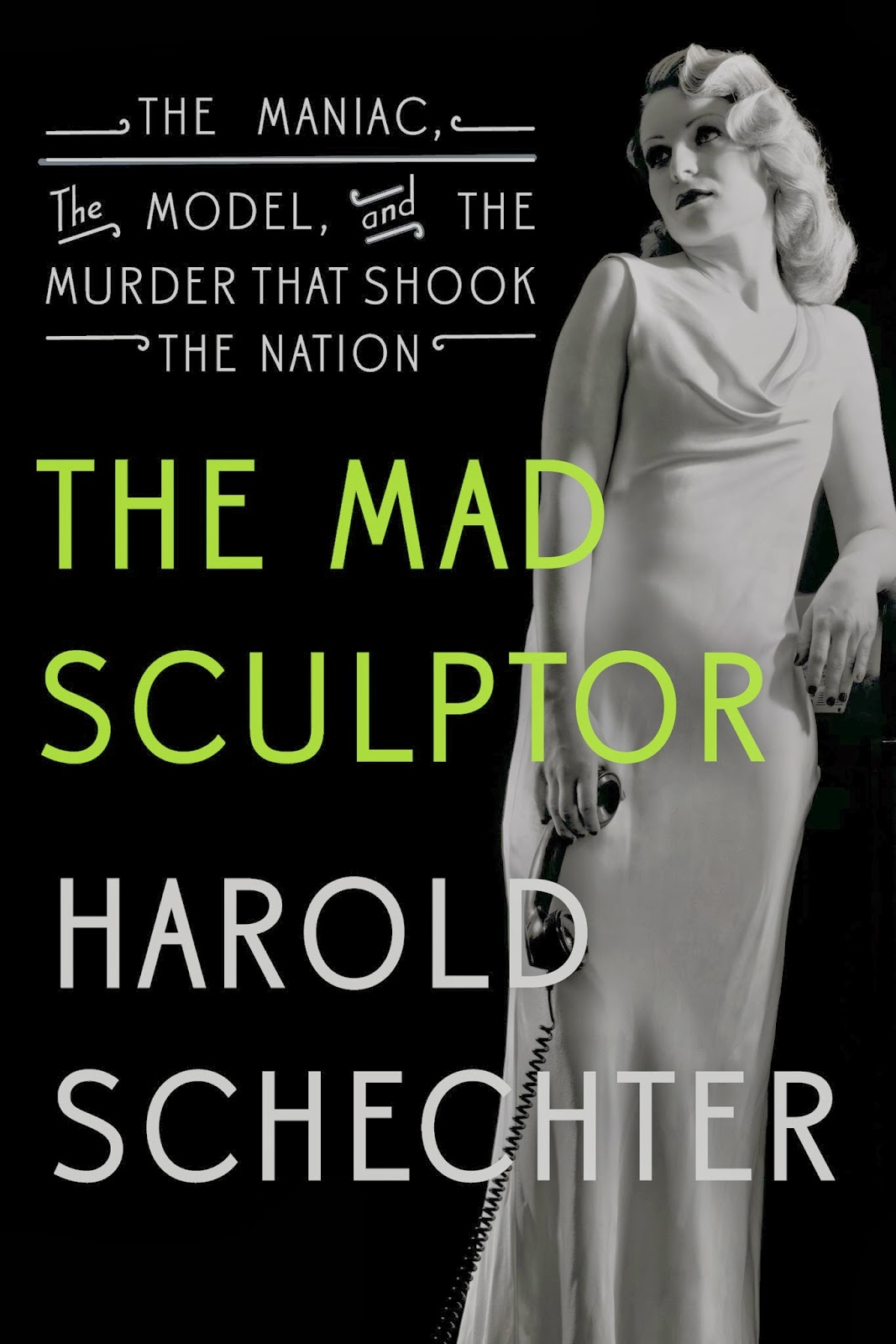
Harold Schecter, the master of historical true crime, included Murder by Gaslight in his blog tour promoting the book The Mad Sculptor. He gave a synopsis of the book and described his writing process.

The Mad Sculptor: The Maniac, The Model, and the Murder that Shook The Nation
Thomas Watkins Kyle Dalton - November 11, 2019

Historian Kyle Dalton works at the National Museum of Civil War Medicine and maintains the website British Tars: 1740-1790. He shared the story of the assassination of Captain Watkins

Assassination of Captain Watkins
Olive Peany Undine - December 16, 2019

Undine, "Blogger of the Grotesque and Arabesque. Remarkably lifelike," plies her trade at Strange Company. She related the murder of Olive Peany, an ambitious but hard to please Ohio girl.

Olive Peany
Abraham Bowen Borden Shelley Dziedzic - January 18, 2020

Shelley Dziedzic blogs at Lizzie Borden Warps & Wefts, the prime source for accurate information on the Borden murders. Her post tells the story of a gruesome murder/suicide from another branch of the Borden family tree.

Murder in the Well
Goffle Road Murders Don Everett Smith Jr. - March 14, 2020

Don Everett Smith revisited the 1850 Van Winkle killings, expanding on his book, The Goffle Road Murders of Passaic County.

Revisiting the Goffle Road Murders
Howard and Nina Brown 

Howard and Nina Brown run JTRForums.com, a discussion group for all things related to Jack the Ripper. They provided two posts on Ameer Ben Ali, arrested for the murder of Carrie Brown, considered by some to be an American victim of Jack the Ripper.
Ameer Ben Ali & an Actor's Tale.- October 17, 2020
The Rescue of Ameer Ben Ali.- February 6, 2021
Jesse Pomeroy Donna Wells - April 16, 2022

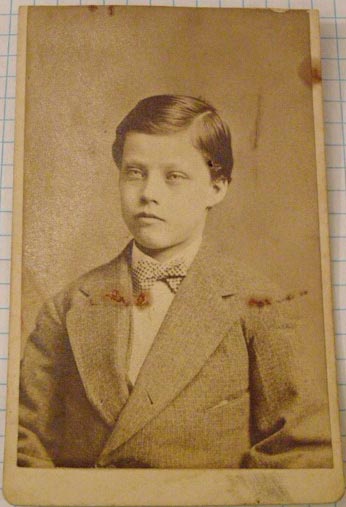
Donna Wells, a former archivist with the Boston Police Department, shared an old photograph she found, believed to be a portrait of Jesse Pomeroy, who, at age 14, who murdered two children in Boston.

 Rare Photo of America's Youngest Serial Killer.
Jesse Pomeroy Bob Moody - May 6, 2022

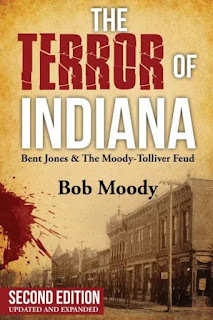
Bob Moody, a retired radio personality, chronicled the murder of his great-great-granduncle, Tom Moody, in his book, The Terror of Indiana; Bent Jones & The Moody-Tolliver Feud. His post relates the events leading to the feud and the murder.

The Moody-Tolliver Feud.

Saturday, May 6, 2023

The Moody-Tolliver Feud.

I am pleased to introduce this week’s guest blogger, Bob Moody, author of The Terror of Indiana: Brent Jones & The Moody-Tolliver Feud. Bob is the great-great-grandnephew of Tom Moody, who was murdered during the Moody-Tolliver Feud.  He is a retired radio personality, programmer, and corporate VP.  Bob served on the board of directors of both the Country Music Association and the Academy of Country Music.  He was inducted into the Country Radio Hall of Fame in 2007.  Bob and his wife, Karen, live in Jeffersontown, Kentucky.

The second edition of The Terror of Indiana: Bent Jones & The Moody-Tolliver Feud is available at Amazon and Barnes and Noble.

For more information: http://www.bobmoody.com/

Facebook: https://www.facebook.com/bobmoodybook/


 THE MOODY-TOLLIVER FEUD


Date:  March 2, 1875

Location:  Orleans, Indiana

Victim:  Thomas Moody

Cause:  Shotgun blasts with poisoned buckshot

Accused:  Alonzo “Bent” Jones; Lee Jones; Parks Toliver; Tom Toliver; Eli Lowry


In 1868 the Moody and Toliver families owned adjoining farms in Lawrence County, Indiana, just north of the Orange County line.  William Toliver (some family members and most newspapers preferred “Tolliver”) was the father of thirteen children, three of whom were living at home when his wife died that year at the age of 53.  The Moody farmhouse was shared by four elderly bachelor brothers and their 51-year-old never-married sister, Mary Ann, known as “Polly.”  The Toliver family was shocked when William unexpectedly married Polly and put her in charge of his household.  Matters got considerably worse when he was killed in a wagon accident eighteen months later.  William Toliver did not leave a will, meaning that Polly – who quickly moved back in with her brothers to avoid the hostility— was entitled to at least one-third of his property.

At the subsequent estate sale one of the Toliver boys shouted, “The black-hearted sons-of-bitches have stolen more than they ever brought here!”  That resulted in a brawl, with Tom Moody being attacked and seriously injured by four Toliver sons and son-in-law Alonzo “Bent” Jones.  Each of the assailants was at least twenty years younger than their victim.  This led to a series of lawsuits that only increased the anger as the Moodys prevailed in court and annexed sixty acres of the Toliver family farm.

Shortly after midnight on Sunday morning, June 25, 1871, as the family was sleeping, the Moody farmhouse was firebombed with jugs of burning benzine.  A group of unknown assassins surrounded the house and fired at those attempting to escape the flames.  Polly suffered severe burns and a hired man was seriously wounded.  Tom Moody was climbing a fence to run for help when he was hit with a load of buckshot.  The next day’s edition of the New Albany Ledger called it a “Dastardly Attempt to Assassinate a Whole Family.”  The attack generated headlines across the U.S. and Great Britain, including a front-page story in the New York Times.  It was reported that there was “no possible chance” that Tom would survive his gunshot wounds – but he did.

The Moody family hired private detectives to find those guilty of the attempted murders and there were more trials and hearings that served only to build frustration on both sides.  Meanwhile, the Moody brothers and Polly sensibly relocated to a two-story house in nearby Orleans.  It was claimed that they rarely left home after dark and turned their dwelling into a virtual fortress.  After more than three years of threats but no additional violence, Tom Moody decided to participate in a card game at a shop in the Orleans business district on the night of March 2, 1875.  After walking home, he stopped to open the gate and someone hiding behind a hedge across the street shot him in the back with both barrels of a double-barreled shotgun.  After hours of excruciating pain, he died the next morning.

The Moody family offered a $3000 reward, while the Indiana governor and local officials added another $1600, resulting in a bounty amounting to a total of more than $125,000 in 1923 dollars.  That enticed additional self-styled private detectives to arrive in the area.  Local citizens were outraged and there were rumors that they might call upon the euphemistic “Judge Lynch.”    

The following year a grand jury indicted five men for the murder of Thomas Moody.  They were: Toliver son-in-law Bent Jones, his younger brother Lee (also married to a Toliver daughter), a young employee of Bent’s woodworking factory named Eli Lowry, local pharmacist Parks Toliver, and his younger brother, self-described “sporting man” Tom Toliver.  Lowry, the only member of that group not related to the Toliver family by blood or marriage, initially tried to escape but soon realized that he had been selected as the “fall guy” and confessed with the hope of a lighter sentence.  He provided explicit details about the plot, including the allegation that Parks had pre-soaked the buckshot used in the murder weapon in a poisonous solution.  According to Lowry’s testimony, Lee Jones had fired the fatal shots (in the company of Parks Toliver), while he, Bent Jones, and Tom Toliver waited outside of town.  When the two killers returned Bent asked if they were sure Tom Moody had been killed.  Parks replied, “Yes, he hollered willfully.”  Eli also implicated some Toliver family members and friends in the 1871 firebomb attack on the Moody farmhouse.  Lowry was spared the death penalty for his cooperation but was sentenced to life at the Indiana State Prison South in Jeffersonville. 

While the remaining prisoners were confined in a common cell in the Orange County jail in Paoli, an apparent lynch mob held the sheriff at gunpoint at midnight and took control of the jail.  As the mob approached the cell, the prisoners fired out at them from behind bars with a pistol smuggled to them by friends of the well-connected Bent Jones, dispersing the crowd.  That episode resulted in a change of venue to Bloomington, where the murder trials began in 1877.  The press reported that nearly five hundred people had been subpoenaed to testify and rooms were so difficult to find that some potential witnesses were provided free accommodations in the Monroe County jail.  It was an event characterized by elaborate Gilded Age legal orations, with some closing statements reportedly exceeding eight continuous hours.  Daily trial updates appeared in major newspapers across the nation.

Bent Jones and his brother, Lee, were quickly convicted of murder in separate trials and were both sentenced to life terms at the Indiana State Prison South, where Eli Lowry was already an inmate.  Parks and Tom Toliver were tried jointly in Bloomington the following year, but the jury was deadlocked, and the judge declared a mistrial.  Their second trial was held in 1879.  Jury deliberations were underway when Parks Toliver was allowed to return to his wife’s rooming house to change clothes, accompanied by a deputy.  While his beautiful wife and her sister distracted the guard, the defendant walked out the back door, mounted a horse waiting in the alley – and rode off into the sunset.  A posse was quickly summoned to conduct what became a fruitless search.  If Parks had waited for a verdict, he would have learned that this jury, too, had been unable to agree, with seven reportedly in favor of conviction and five voting “not guilty”.  The judge dismissed the jury on the grounds that one of the defendants could not be present for the verdict.  Two years later, amidst complaints about the amount of time and public money already spent on the previous trials, all charges were dropped against Parks and Tom Toliver.

It was later revealed that Parks had made his way to Arkansas, where he was a fugitive until it was safe for him to return home.  Now styling himself as Dr. Milton Parks Tolliver, he established a medical practice in Elnora, Indiana, although there is no evidence that he ever graduated from medical school.  He outlived three of his four wives and was arrested for selling illegal drugs and operating a phony diploma mill for medical students before his death in 1926.  Tom Toliver was shot and killed in 1900 following a dispute over allegedly loaded dice in Washington, Indiana.  Eli Lowry worked in the prison office and was on duty when a telegram arrived on Christmas Day of 1890 informing him that he had been pardoned by the governor.  Lowry went from prison to a job with the Vigo County sheriff’s office in Terre Haute.  That ended when he was accused of being involved in a plot to rob inmates.  Lowry died of consumption (tuberculosis) in 1895, less than five years after his pardon.

Lee Jones, who fired the shots that killed Tom Moody, was pardoned in 1893 after serving sixteen years.  He returned to Mitchell, Indiana, and was killed in a gruesome accident at the city new electrical plant less than four years later.  His older brother, Bent Jones, who was regarded as the kingpin behind the murder, was also paroled in 1893.  He joined his brother in Mitchell and bought a saloon.  Called “The Terror of Indiana” by the Louisville Courier-Journal, Bent was constantly in trouble and was finally ordered to leave Indiana permanently in 1898 to avoid prosecution after an innocent young farmer was killed by someone who had mistaken him for Jones.  After a short stay in Louisiana, he used his service in the Union Army during the Civil War to enter the National Home for Disabled Volunteer Soldiers outside Los Angeles, where he died in 1918.  His personal effects were valued at thirty-five cents.  Alonzo “Bent” Jones is buried in the Los Angeles National Cemetery.


Saturday, April 16, 2022

Rare Photo of America's Youngest Serial Killer.

This week we have a guest post from Donna Wells, a former employee of the Boston Police Department who made a rare discovery—a previously unknown photograph of “The Boston Boy Fiend,” Jesse Pomeroy.


Discovery of Previously Unknown Photograph of America’s Youngest Serial Killer, Jesse Pomeroy

I have a very strange story to tell you. I call it my strange little serial killer story… My name is Donna Wells. I graduated in 1997 from Simmons College in Boston with a master’s degree in library and information science. Several months later, I accepted a position with the Boston Police Department as their first records manager and archivist. I was tasked with establishing and managing the Department’s records management program and also with the day-to-day running of the Department’s records center and archives. I served in this position until 2007 when I took early retirement due to health and personal reasons.

Jesse Pomeroy Carte de Visite
During the time that I was with the Department, I read everything I could get my hands on regarding the history of the Department and Boston crimes. 

I now live in Central Maine with my husband. I am disabled, but I buy jewelry, buttons, and other items at auctions, flea markets, and thrift stores and sell them on eBay.  

One day, some time ago, I grabbed a tin of buttons from the shelf and took it downstairs to sort. I opened the tin and, lying on top of the buttons, was an old envelope, all folded up. There was nothing written on the envelope, so I opened it and inside there was an old photograph (a carte de visite) of a young boy. He was kind of creepy looking because the irises of his eyes appeared to be without color – they were a dead white. I put the photograph aside and continued with the buttons. Over the next several days, I was drawn back to the photograph over and over again. It just seemed like I should know who this was – that I had seen a similar image somewhere. And there was something tickling my brain, something about a white eye. 

As I was looking at the picture one day, it just came to me about a book that told the story of a young Boston serial killer that I had read when I was with the Department about a young man who had committed some truly horrifying acts—about a young man who had at least one white eye— I couldn’t remember the name of the book or his name, but I googled “Boston serial killer 1800s,” and Jesse Pomeroy came at the top of the list.

When fourteen-year-old Jesse Pomeroy was arrested in 1874 for the murder of Horace Millen, he was thought to have tortured at least six children and tortured and murdered two more. The two murder victims, ten-year-old Katie Curran and four-year-old Horace Millen had both been stabbed and nearly decapitated. Katie also had a fractured skull and several broken bones. Horace had also been nearly castrated, had one eyeball deeply pierced, and been set on fire. The victims that had managed to survive his attacks had suffered whippings, stabbings, beatings, which included broken noses and split lips, vicious bites to the face and buttocks, attempted castration, and attempted scalping. At the time of his arrest for Horace Millen’s murder, Jesse’s reputation in Boston as the “Boy Torturer” was firmly established. 

In the course of my research, I found out that the title and author of the book I had read was Fiend: The Shocking True Story of America’s Youngest Serial Killer by Harold Schechter. I no longer possessed a copy of the Schechter book because I had donated it to the BPD Records Center & Archives. I know my successor at the archives, Margaret Sullivan, so I called her and told her my story. I sent her a scan of the image that I had found and asked her to compare it with the drawing in the book. Margaret thought that the image could be Jesse. She pointed me to some resources, and I dove back into the internet.

On the back of my photograph, there is a partial photographer’s name. The last name is Dunshee, and there is an address given as 323 Washington Street, Boston. There is also what I assume is the date of the print – 1875 in the lower left corner. There is a very useful database online that lists Boston’s photographers and provides the dates that they would have been at a particular address. The approximate dates that this database gives for when E.S. Dunshee was at the address on the back of my photo are 1873-1874.

Back


I had ordered another copy of the Schechter book and had read it again to see if I could find anything that would help me to authenticate the photograph. On page 92, I found a quote from a journalist from the Boston Herald:

“He does not look like a youth actuated by the spirit of a fiend, and, with the exception of a peculiarity about the eyes, he has no marked expression in his face from which one might read the spirit within. The idea that he is insane is not supported, except by the extraordinary character of his conduct.” 

Contrary to what many reporters of the time of the murders claimed, the image in my photograph does not show a wild-eyed lunatic, neither is there any indication of the monster that he could become, but shows a seemingly normal, although sad and confused, boy with, admittedly, very strange eyes. Looking at my photograph, I am forced to speculate that Jesse’s very normality made it possible for him to succeed in deceiving and assaulting his victims. I mean, if he truly looked like a monster, he would not have been able to get close to his victims.

In my photograph, there does not seem to be any great differences in the visible portions of his actual eyeballs, however, because the photograph is black and white, any differences of color between his irises would not be obvious. I have examined the image under magnification, and the only difference that I can detect is a slightly more “flattish” look to the iris of his right eye. There are, however, several much more obvious external differences – his right eye is more slanted and smaller than his left. Also, there is a dark area around his right eye. It appears to be a bruise of some kind, but whatever it was, it was permanent because it remains in all of the future photographs of Jesse. In later photographs, he does appear to have developed some kind of clouding of his right eye, but in my early photograph, that is not evident.

     1870s Drawing -- Found Photograph


There are some pretty striking similarities between my photograph and the drawing of Jesse that is reproduced in the Schechter book. The pose is the same. The hairstyles are identical. The costume is similar. I speculate that the artist who created the drawing might have depicted Jesse in a collar-less shirt without the bowtie of my image because he didn’t want Jesse to look too “normal.” The features, especially the shape of the ears, jaw, and nose, are alike. The eyes are very similar, except the artist had drawn Jesse’s right eye as clouded. Perhaps Jesse’s right eye had become clouded by the time that the artist drew his portrait. However, I believe that it is an inescapable conclusion that the drawing was based on another copy of my photograph. The photograph of Jesse in 1920 that is in the Schechter book is probably the best to compare with the earlier photograph. Following is the text of an email from Harold Schechter in response to my email to him: 

Dear Donna--

    My agent forwarded your email to me.

    After closely studying your photograph, I think you may, in fact, have found an early portrait of Jesse Pomeroy. I base that conclusion by comparing it not only to the newspaper engraving of the adolescent Pomeroy reproduced in my book but on the photograph of the elder Jesse that served as the frontispiece of his 1920 book of poems, which I've attached. Take a close look at the right eye in both your photo and the later one: they are virtually identical--weirdly shaped, slightly slanted, distinctly different from the left, and surrounded by a strange dark shadow as if he had a permanent shiner.

    It's an exciting find, and I would certainly consider writing it up and trying to get it published somewhere. Thanks for sharing it with me, and let me know if I can be of further help. Best, Harold S.

Jesse Pomeroy, 1920

I hired Maureen Taylor, a nationally-known historical photograph expert, to assess the photograph. I told her my story and emailed her high-resolution images of the photograph. She replied, saying that it was “an 1870s image of a man in a pretty typical suit for the period [and that] the card stock used agrees with that time period.“ She added that it was “an incredible random find [and] an astonishing discovery!”   

I am still, even now, pretty freaked out about the fact that this photograph, a previously unknown photograph and the only known photograph of Jesse during the period in which he was active, ended up in my buttons, given the fact that I am probably one of the few people who might be able to recognize the subject.


Donna Wells can be reached at TonyMay2021@gmail.com for questions and comments. 

Saturday, February 6, 2021

The Rescue of Ameer Ben Ali.

This week’s guest post from Howard and Nina Brown of Jack The Ripper Forums - Ripperology For The 21st Century (jtrforums.com) continues the story of Ameer Ben Ali (aka “Frenchie”) who was falsely convicted of the 1891 murder of Carrie Brown. "The Rescue of Ameer Ben Ali" focuses on the evidence that led to his release.

THE RESCUE OF AMEER BEN ALI

In the last Murder by Gaslight article of ours, along with the photograph of Ameer Ben Ali, an article was transcribed which featured a prominent stage actor proclaiming he had been told by Ali's court interpreter that Ali had confessed to being in the same room as murder victim Carrie Brown and inferring that he had committed the heinous crime. 

Whether Ali stated that he committed the crime is irrelevant since he didn't murder Carrie Brown.  He didn't have the key which was necessary to lock the door to Room 31.  Within days a handful of people associated with the real killer's employer knew that and it would not be until a decade passed that this miscarriage of justice would be resolved resulting in the pardoning & exoneration of the Algerian.  There were three efforts towards pardoning Ali; one following the sentencing, another in 1897, and finally in 1901.

The proof of his innocence all along was the key to Room 31 at the East River Hotel taken by the killer and left by the same at the residence of his then employer, 51-year-old George Damon of Cranford, New Jersey.

Damon was the proprietor of a printing firm at 44 Beekman Street, Manhattan, which was not far from the Brown murder site.  Damon was also a pillar of his community in Cranford, situated in Union County 18 miles from Manhattan.  Damon, in addition to his printing firm, dabbled in real estate, held patents, & was a member of the Chamber of Commerce.  This photo is of the Damon residence as it looked 100 years ago. 


Saturday, October 17, 2020

Ameer Ben Ali & an Actor's Tale.

This week we are pleased to present a guest post from Howard and Nina Brown, experts on the Whitechapel Murders of Jack the Ripper. They are the owners of JTRForums.Com and have been Ripperologists for 20 years. Along with the website, JTRForums.Com, they also have pages on Twitter, Facebook, and a You Tube page. They're always looking for people interested in the Whitechapel Murders and can be contacted at Howard@jtrforums.com.

The article is on Ameer Ben Ali, convicted and later exonerated of the murder of Carrie Brown in New York City in 1891, and includes a rare photograph of Ali.


Ameer Ben Ali & an Actor's Tale.

Carry Brown
Carrie Brown

On April 24th, Nina and I decided to look into newspapers for articles in commemoration of the 129th anniversary of the murder of Carrie Brown at the East River Hotel in bowels of the Lower East Side of New York City.   There's a considerable amount of newspaper coverage of her murder during 1891 and the following years already on JTR Forums & on Casebook and the thought of finding something new was not something we were sure we'd do.  

As fate would have it, we did just that.

I came across the following article in the Buffalo Courier, containing the bold headline exclaimed that Glaswegian-born thespian, William H. Thompson, expressed his understanding that that the court interpreter for Ameer Ben Ali actually revealed to him, personally, that Ali confessed to the Brown murder. 

I haven't been able to find another article in which a confession by Ali in any form is made to the murder in Room 31 and obviously none that refute the charges made within it.  That doesn't mean one doesn't exist or that if it does it won't be found.

Saturday, March 14, 2020

Revisiting the Goffle Road Murders.

This week’s guest post revisits the Goffle Road Murders posted here several years ago. Don Everett Smith Jr., who literally wrote the book on this crime (The Goffle Road Murders of Passaic County (History Press, 2011)), expands on the story of the murders and subsequent execution of the killer.

Don lives in Central Pennsylvania with his wife and cats and tortoise, Flash. He has published works at Tombstone Stories Publishing and comic books at Pinion Comics. Don also hosts his podcast "Conversations of the Strange" where he interviews horror and paranormal creators and icons. 


Revisiting the Goffle Road Murders 
By Don Everett Smith Jr.  

INTRODUCTION: 

It was on June 4th, 2011 that “Murder by Gaslight” posted an article about the 1850 murders of John and Jane Van Winkle in, what is now, Hawthorne, New Jersey. The post was entitled, “Terrible Tragedy in New Jersey.” 

The blog posted the text of an article from The Republican Compiler from Gettysburg, Pennsylvania which was dated January 28th, 1850.   

I had come across this same article when I researched a book about the Van Winkles entitled THE GOFFLE ROAD MURDERS OF PASSAIC COUNTY: THE 1850 VAN WINKLE KILLINGS. It was published in 2011 from The History Press (now part of Arcadia Publishing).

When I finished my research on the Van Winkle murders, I thought that I had found everything there was about the subject. 

In the following years, my wife and I moved out of New Jersey and into central Pennsylvania. I was able to pick up extra work as a freelance writer and I began writing articles about local Pennsylvania history. I discovered thanks to an increased interest in local history and genealogy (not just in Pennsylvania but all over), more and more newspapers and political records were uploaded to the internet. 

Curious to see what was out there regarding the Van Winkles, I did a simple search and found more information.  

I reached out to the kind people at “Murder by Gaslight” and they allowed me to put together an article which featured the new information I discovered. 

MURDER & EXECUTION: 

What is now Hawthorne was once part of a larger town called Manchester. John and Jane Van Winkle owned over 212 acres and Van Winkle served as a judge of the common pleas in Passaic County and a grist miller. 

It was just after 1 a.m., on January 9th, 1850, when the Van Winkles were in bed. Their former ranch hand, a Liverpool native named John Jonston crept into their sleeping quarters. 

He struck Mrs. Van Winkle in the face - twice - with a hatchet which awakened the Judge. He immediately leapt from the bed and struggled with Jonston. 

The attacker had a large knife and struck the older man in the stomach and ripped open his abdomen thus exposing his intestines.  

“Murder! Murder!” Van Winkle screamed as Jonston rushed out of the room. He ran up a flight of stairs and down a ladder. Upon hitting the ground he ran to what is now called Rock Road in Godwinville (today Glen Rock, New Jersey). He hoped to grab a train and head to New York City and anonymity. 

However, thanks to a light snowfall, a group of neighbors tracked his footprints and captured him.
Jonston “was taken in custody and tied at once” to prevent him from escaping. 

“Members of the party remarked about the blood on his back, [Jonston] said he had been killing hogs, and the blood came from them as he carried them in from the place where they were killed. The blood was so fresh on his shirt that [a] woman squeezed it out upon her hand,” was said.

Jonston was brought back to the Judge’s homestead.

“Mr. Van Winkle, who was dying, looked on the man, while holding his bowels from falling through a ghastly wound in the abdomen, and had still strength enough left to say, ‘Yes, it was he’,” a newspaper recorded in the January 16th, 1850 edition of The Paterson Intelligencer.

Jonston denied it and was taken into custody by Passaic County Sheriff Nathaniel Lane, a tall man who had taken part in the Underground Railroad.  

Van Winkle would linger until about 6 p.m. that night when he passed from his injuries. Jane had died instantly of her wounds earlier that morning. 

The court appointed Socrates Tuttle to defend Jonston. With such damning evidence, Jonston was convicted and executed on April 30th, 1850. He had the dubious double honor of being the first murderer and the first man executed in Passaic County.    

A reporter from the Newark Daily Advertiser described Jonston’s last word in the May 1st, 1850 edition:
 “[T]he years 1830 and 1850 would be long remembered: that he arrived here from Liverpool in 1830, and that in regard to his present position he was not guilty of the crime for which he was about to suffer, but that he forgave all the world.”


Local newspaper sources described how after Lane “made final adjustments to the machine, he pulled the cap over Jonston’s face and placed the rope around his neck. “In less than a minute,” Lane threw the lever, “and the victim swung in the air.” Jonston “struggled...somewhat for a few minutes, raised himself up with a spasmodic, muscular action a few times, and [after] about five minutes…all signs of life left him.”

It was added that “after hanging for half an hour, he was ‘black about the hands as an African.’ Jonston’s coffin was brought to him, and ‘all that was left of Jonston, was gently lowered into his narrow bed’.”

As for the Van Winkle estate, the house, where the judge and his wife were murdered, still stands in the heart of Hawthorne, New Jersey. The exterior looks very much like it did back in the 1850s.
The part of the house where the Van Winkles lived was closed off. In fact, The New York Times recorded on Aug. 15, 1882 that it, “was locked and barred” for over 32 years. It went on to describe that “vines had grown so thickly around the doors and windows.” 

However, the more salacious aspect of the article mentioned that “no one seeming disposed to lease the valuable and beautiful property on account of the stories prevalent about its being the abode of unearthly visitants.”  

EXECUTION REVISITED: 

To give a complete picture of the execution, a writer for the New York Daily Herald described, in the May 1st, 1850 issue, that the “morning was clear and beautiful, the sun rising on the hills of Paterson in all its majesty, shedding its radiant beams of glory as it had often done before.”  

However the residents felt a “gloom manifest...intermixed with a kind of pleasing unsettled expectation that something desparate or terrible was about to take place” as “Dutch farmers were pouring into town from all quarters from many miles distant.”  

“Everybody appeared to be anxious to witness a man pay the extreme penalty of the law by the forfeiture of his life on the gallows,” the writer said.  

The report described that the “beaus and the belles were dressed up in their Sunday-go-to-meetings.” 
The jail yard was surrounded by a 15 foot high fence, as well as members of the Jefferson Blues were on hand to help keep the peace as they made “quite an imposing appearance.”  The yard would hold an estimated 2,000 residents.  

In the center was the gruesome structure. When The Goffle Road Murders was written, I did not have access to the articles that gave a fuller description of the gallows themselves. 

“The gallows was made by two strong supports and a beam on the top, through the center of which was the rope and pulley. The weights being made to drop on the cutting a small rope, and, in reverse, the man goes up,” the writer described.  

What is interesting about this, is that it resembled the gallows built to execute Antoine LeBlanc in Morristown, New Jersey in 1833. 

This is technically called the “upright jerker” method of execution. Most gallows used a trapdoor method of the criminal dropping to his death. However, the upright jerk method involves a weight tied to a rope, fed up through a pulley system and tied to the noose connected around the neck of the condemned. 

When the weight drops, it jerks the criminal straight up. Ideally this method would break the neck of the criminal quickly.  

Thanks to a quick search online, and some direction by writer and historian Robert Damon Schneck, I was able to find this drawing here.  

However, due to the fuzziness of it, I have decided to reproduce it. 


It was mentioned in my book that there were crowds and jeers, but in this article, it described several women wanting to get a closer look at the gallows. However, Lane refused. 

At the same time this occurred, the crowd began to get restless. It was reported that persons shouted, “Bring him out!” while another person shouted, “Let’s have it over - we want to see him up!”  

At 11 a.m., a shed that held over 150 people collapsed due to overload. 

“Luckily no bones were broken, (it was) only barked shins and scratched faces,” the article said. 
Before Jonston was led out, William E. Robinson, a correspondent for The New York Tribune spoke to Jonston. Under the pseudonym “Richelieu,” he described how “a few minutes before (Jonston) was led out I visited his cell.”  

“He was quite calm, and persisted in asserting his innocence,” Robinson said.   
Within the half hour, Jonston came out dressed “in a white muslin dress, in the Turkish costume; the bottom of the pantaloons, his sleeves and neck were tied with black ribbon.” 
All the other sources, as did the “Herald” writer, mentioned that his arms were strapped to his body with a leather belt.  

The Herald reporter was able to visit with Jonston the night before: 
“Our reporter visited the prisoner in his cell. The unfortunate and miserable creature was, at this time, dressed for execution; he appeared to be calm and collected, and walked backwards and forwards, holding in one hand a pocket handkerchief. He is a man of small stature, about 5 feet 5 inches, stout made, with rather a mild, smiling cast of countenance, dark hair and eyes, English expression, an Englishman by birth, aged 35 years.”


The reporter and Jonston “conversed freely.” 

“He said his parents were dead, and that he had a brother in England, but he did not wish him to know his fate; he said he was satisfied and pleased to leave this world, as he made his peace with his God,” the writer said.  

As Jonston stood on the gallows, Cornelius Van Winkle, “the son of the murdered man (and woman), placed himself, in order to watch every movement of the culprit.” Just pure speculation here, but “every movement” could mean “twitch” or “struggle”. 

Cornelius had hoped to “hear if (Jonston) made any confession, as it was expected he would at last, when under the gallows, confess his guilt.” 

It was just after 1 p.m. when prayers were said, Bible passages were read and Jonston made his final statement. 
“I have only to express a few words, gentlemen. April 30, 1850, will long be remembered. It is not my duty to say much. I have been judged guilty of the crime. I forgive the whole world; I have no fault to God. I know I must die and I die in faith and in hope to be forgiven of all the sins I have been guilty. I am innocent of this; and I have nothing to say that is my situation. I have made my peace with my God. I am innocent; I have no interest in saying so; I know I am going to die, therefore I have no interest,” Jonston said in a low tone. 


He continued. 
“All have behaved well and clever to me since I came here to this place. I am freely willing to part from this world; it is a pleasure to me in my situation. I cannot say anything more in my situation that I know of, and I hope, by the blessing of the Almighty, that my peace is made with him. I don’t wish my friends to know about it, but they will not believe it, without they hear it from someone who knows the circumstances. After my trial, I saw there was no hope. I am ready to die and meet my God. Amen.”


Allow for some facts to be restated - it was on Jan. 9th, 1850, tracks were left in the snow leading away from the Van Winkle homestead after the attack. The tracks were followed and they lead straight to Jonston at a train station in (what was) Godwinville. He had with him a shirt covered in blood. Remember that blood was so thick, a woman was able to ring it out like a dish cloth after washing a sink full of dinner dishes.  

It could only be imagined how poor Cornelius Van Winkle felt upon this condescending denial. Cornelius proved himself a man of restraint for not rushing the gallows at the “I forgive the whole world” and throttling the Liverpoolman himself.  

Apparently even the Reverend on scene didn’t believe Jonston either.  

“Rev. Mr. Hornblower most earnestly requested him to make a confession; that if he had any hope, he must confess his sins, and if he wished for salvation hereafter, he must not die with a lie on his lips,” the reporter said.  

Jonston again denied his part in the death of the Van Winkles.  

At this point Lane “adjusted the rope about (Jonston’s) neck; but upon endeavoring to attach it to the upper rope, (Lane) found it too short.”  

“Here an awful suspense took place, of near ten minutes, before a bench could be procured; and a deathlike silence pervaded the whole assemblage,” the writer said.  

The bench was placed on the platform “and the culprit stepped on it, making him of sufficient height.” The rope was adjusted, the white cap Jonston had on top of his head was placed upon his face. 

“The (previously mentioned small) rope cut, and, in an instant, the murderer was suspended in the air, by the neck, an awful spectacle and warning to all who take the life of a fellow being unlawfully,” as was recorded. “The culprit...gave several convulsive movements of the legs and body, and all was over.”  

His time of death was about 1:20 p.m. and he hung there until 2 p.m. 

LEGACY: 

It is discussed in The Goffle Road Murders what occurred with the remains of the judge and his wife and their estate. 

However, an interesting fact was discovered about relics associated with the Van Winkle murders. In an article in The Morning Call (of Paterson, New Jersey) dated May 4th, 1911, “curious visitors” were attracted to a “collection of horrors at (the) Prosecutor’s Offices.”  

“It is just becoming known that the court house has a chamber of horrors as gruesome as any of the subterranean compartments and pits described by Poe in his talks of mysterious murders,” a Call reporter said. “The store-room of everything that is likely to cause one to shudder with fear, forms part of the prosecutor’s headquarters in the county building.”  

The writer described a “cabinet with large glass doors (which exhibits) such things as hangman’s nooses, skulls of murdered people, shot guns, revolvers, knives which were used in slaying people, lock-picks, files, dark lanterns, baseball bats, stuffed clubs, forks, razors , and innumerable other implements used in battles for life and death.” 

It was said that all of this was “evidence of work done in the line of suppressing crime in Passaic county.”  

Counting Jonston, five men were hung for murder between 1850 and 1906. Eventually, death penalties were carried out in Trenton, New Jersey via electric chair. In the previously mentioned cabinet, photographs and the nooses used in the last four hangings were on display.  

 “Under the above exhibit is the knife used by (John Jonston), who paid the death penalty for the murder of Judge John Van Winkle and his wife,” the writer said.  

He added, “The knife which he (Jonston) used was given into the custody of William G. Gourley when he was prosecutor, by Nathaniel Lane, son of the late Sheriff Lane.”  

The rest of the article goes on to discuss other items related to crimes, killings and murder. 
Granted this article is almost 110 years old, it could only be speculated as to what has happened to the items mentioned here. In all candor, an opportunity has not availed itself as of now, to investigate the location or existence of the knife.  

However, this article is proof that with some patience and research some amazing things can be uncovered. I, for one, will remain positive.